



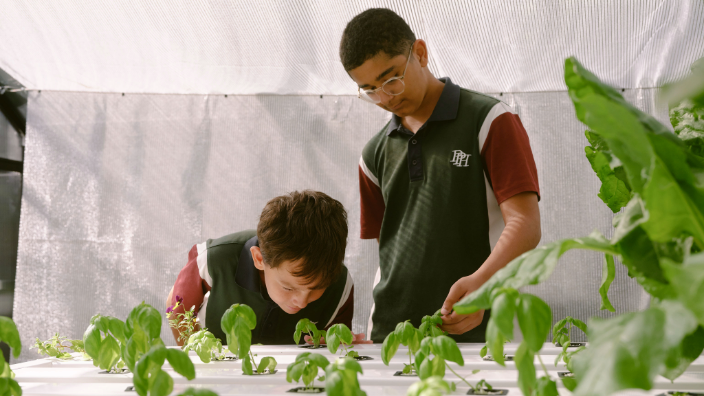
 As food insecurity continues to affect Australian families and communities, Food Ladder has announced the first schools participating in its landmark partnership with Greater Charitable Foundation.
Beaudesert State High School, Pacific Pines State High School, Park Ridge State High School and Coomera State Special School have been announced as the first four schools with a further five schools to join the program over the next 18 months.
The $600,000 partnership will establish nine Food Ladder climate-controlled hydroponic greenhouses across Southeast Queensland schools, creating permanent education and food-growing infrastructure that will benefit generations of students and their communities.
Food Ladder CEO and co-founder Kelly McJannett said schools are one of the most powerful places to strengthen Australia's long-term food security.
“Every Food Ladder greenhouse becomes permanent community infrastructure,” Kelly said.
“Students don’t just learn how to grow fresh food. They build confidence, develop practical STEM skills, learn healthy eating habits and take that knowledge home to their families.
“Because these greenhouses become part of everyday school life, every new cohort of students builds on the impact of those before them. This partnership isn’t simply delivering greenhouses – it’s investing in healthier, more resilient communities that will continue benefiting for decades.”
Once all nine schools are operational, Food Ladder’s national impact modelling projects the partnership can produce up to 13,140 kilograms of fresh produce every year, supplementing approximately 175,000 meals annually based on the Australian Dietary Guidelines’ recommended vegetable intake.
The climate-controlled hydroponic greenhouses can grow more than 40 varieties of fruit, vegetables and herbs year-round, regardless of outdoor weather conditions, while using up to 90 per cent less water than conventional outdoor agriculture through recirculating hydroponic systems.
Over the next decade, the partnership is projected to produce up to 131 tonnes of fresh produce, supplementing approximately 1.75 million meals and creating a lasting legacy of healthier, more food-secure communities across Southeast Queensland.
Already, the four operational schools are providing ongoing access to Food Ladder’s education program for 4,272 students. Based on Australian household averages, the program is also expected to indirectly reach approximately 2,370 families and 4,740 parents and carers, as students take fresh produce, food literacy and healthy eating habits home.
NGM Group Foundation Chair, trustee of the Greater Charitable Foundation, Catherine Robson said the partnership was about investing in young people and the long-term wellbeing of regional communities.
“Greater Charitable Foundation is proud to support Food Ladder’s expansion into Southeast Queensland and it’s been incredible to watch the first four schools bring the program to life,” Ms Robson said.
“We are committed to supporting our communities and helping them to lead happy and healthy lives. By investing in students through this program, we’re giving them the tools to build more food-secure and sustainable communities.
“We can’t wait to see the lasting benefits of this program for students, teachers, families and the wider community for years to come.”
Pacific Pines State High School Principal Damien Burke said the greenhouse had already become one of the most valuable learning spaces on campus.
“Since the Food Ladder greenhouse arrived, we’ve seen our students engage with science in a completely different way,” Damien said.
“It's hands-on, it's real, and it's giving them a genuine window into careers in STEM, agriculture and food science that many hadn't considered before. Students who might not put their hand up in a traditional classroom are the first ones in the greenhouse, testing pH levels or troubleshooting the irrigation system.
“This partnership isn't just about growing food, it's about growing confidence. We see students walk in unsure of themselves and walk out standing a little taller, laughing with their mates and genuinely proud of what they've grown. Watching them find that sense of belonging and joy in coming to school is exactly why we do this.”
Schools already participating in Food Ladder programs nationally have reported significant improvements in student engagement, attendance, confidence and school culture, with some schools recording attendance improvements from 30 per cent to more than 90 per cent.
Applications are now open for a further five Southeast Queensland schools to join the program over the next 18 months. Eligible schools can register their interest at foodladder.org.